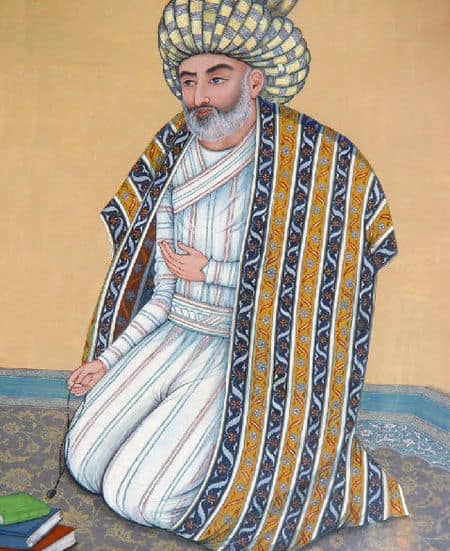
Muḥammad Bāqir b. Muḥammad Taqī b. Maqṣūd ʿAlī al-Majlisī (b. 1037/1628-29 – d. 1110/1699) known as al-ʿAllāma al-Majlisī or the Second Majlisī was among the most famous Shi’a scholars in fiqh and hadith.
Al-‘Allama al-Majlisi was interested in hadith studies more than other Islamic sciences and was close to Akhbaris. His most famous book was the comprehensive hadith collection of Bihar al-anwar which played a great role in the revival of the significance of hadith in religious study. By educating students and writing many works, some of which were in Persian and for general readers, he influenced the Shi’a culture and scientific methods of later scholars.
He was very famous due to his cooperation with Safavids and his influential social and political roles at that time. During the rule of Shah Sulayman Safavi, al-‘Allama al-Majlisi reached the position of Shaykh al-Islam and was very influential during the rule of Sultan Husayn Safavi.
Birth and Lineage
He was born in Isfahan in 1037/1628.[1] He was born in the rule of Safavids and the last year of the rule of Shah ‘Abbas I. His father, Muhammad Taqi al-Majlisi was among the noblemen and famous Islamic authorities of his time and one of the students of Baha’ al-Din al-‘Amili, ‘Abd Allah al-Shushtari, and Mirdamad. Muhammad Baqir’s mother was a daughter of Sadr al-Din Muhammad al-‘Ashuri al-Qummi who was in a family of knowledge and virtue.[2]
It is quoted from Muhammad Baqir’s father, “One night after the midnight prayer, I had a great feeling and just heard my kid’s crying. I said to God, ‘O God! By the rights of Muhammad (s) and his family (a) make this kid a preacher of Your religion and the rulings of the Master of Prophets (s) and bless him with limitless opportunities.'”[3] It is also quoted from him that he ordered his wife not to milk Muhammad Baqir when she was not tahir.